Apple Computer – 2000

A recruiter called.

“Hello. I’m from Apple Computer. We are looking for a manager on our software team. Your experience with Mac programming, compilers, and as a manager are interesting to us. Would you be interested in talking to us?”

Interested? Interested?

When I was in junior high, the school had a teletype hooked up to a mainframe, and a paper tape machine to save and read files.

Teletype Machine
Teletype

I did some toy BASIC programming on that; it was fun, I guess, but slow, and loud. (Did you know that Control-G (BEL) actually rang a metal bell on the teletype?). It was also fairly obsolete technology. For 9th grade, my school bought a TRS-80 Model II with a cassette drive, which I spent a lot of time on.

Apple ][ (with a Disk ][)
Good ol’ Trash 80
However, one of my friends kept bad-mouthing it; his family bought him an Apple ][, and two Disk ][ 5.25″ floppy drives. He went on and on about this computer.

Apple ][ (with a Disk ][)
Apple II
High school also had a TRS-80 Model II. I played with an Apple ][ in a computer store, and was impressed that programs in BASIC on the Apple ][ were saved with less space than on the TRS 80 (they probably tokenized it).

My first year at Rice, Apple introduced Macintosh.
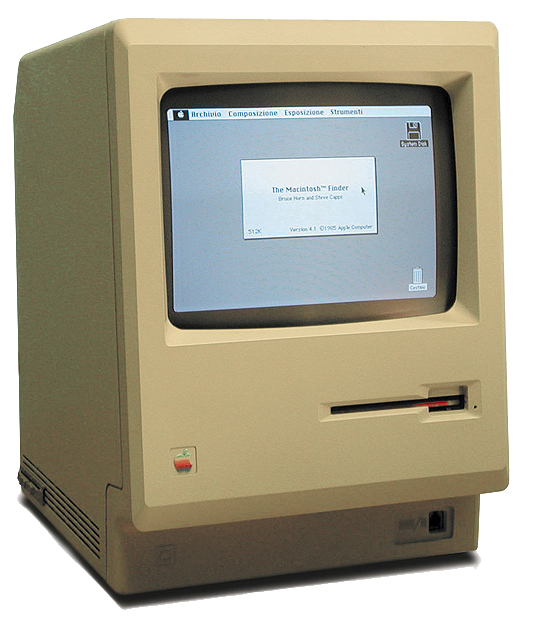
Mac
hello!

Rice was one of the dozen or so schools that got first access; a few weeks later, Macs appeared on the computer building. I was spellbound. I loved it. I spent hours and hours playing with MacPaint.  I did all of my papers with MacWrite. There was no way I could afford one for myself, so I could not get into programming it at that time, but as they quickly evolved while I was in college into real productivity machines, I wanted one more and more. Even more than that, though, I decided I wanted to write software for it, preferably at Apple. With my grades, I did not figure that the last part was in the cards, but one can dream.

My last year at Rice, I ended up working on the Apple ][GS, which at that point, had a Mac-clone operating system. So I kind of learned the basics of Mac programming working on GSOS writing AppleWorks GS. That company was bought by Claris, which I talked about here.

At Claris, after AppleWorks GS shipped and was end-of-lifed, I ended up working on the Mac on FileMaker Pro. I also worked on the Windows port of FileMaker, and then later, when the Mac moved processors from the Motorola MC 68000 family to the Power PC family, I did the primary Power PC port.

When I first started at Claris, it was a subsidiary of Apple,  but an independent company, intent on going public. Apple changed its mind in 1991, much to everybody’s chagrin. However, some good came out of it for us Claris people.

The first is that, as a result of actually working for Apple, we got sabbaticals, six paid weeks of every five years in addition to the vacation time we accumulated. (Those are gone now).

The second big thing, though, is we got discounted prices on Apple hardware. There were three levels. One was called “2nd discount”, which was a small discount. People would buy computers for friends with that one. One was the “1st discount”. We got one of those/year, and it was a pretty substantial discount.

But the real prize was the Loan-To-Own (they got rid of this later as well). Once in your entire career at Apple, you could pay an upfront fee of basically manufacturing cost, and if you kept it for a year, and stayed employed at Apple for a year, you got to keep it. If you left early, you had to pay the difference between the Loan-To-Own price, and the 1st discount price.

You were also not supposed to sell a Loan-to-Own before the year was up. I know of one person who was walked out the door after Apple discovered that they had posted their Loan-to-Own for sale on Usenet.

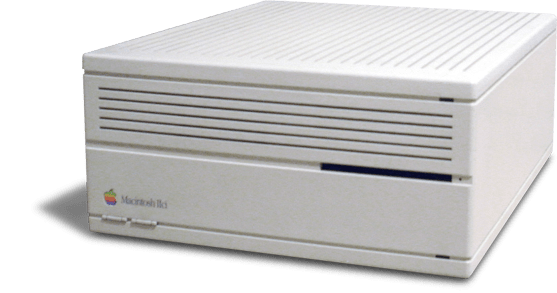
In 1990, I finally got my own computer. I got a Mac IIci, with 8 MB RAM, an 80 MB internal hard drive, an Apple 15″ color monitor, and an Apple Portrait Display. And I have been a Mac owner ever since, although that IIci is long gone.

Mac
My baby!

So, yeah, I live and breathe Apple to this day. And I was definitely interested.

Mac
The Emerald City

The interview was at the Infinite Loop campus, which I had last visited in 1996, when I purchased my Power Mac 8600/300 on my last day at Claris. I was shown into a conference room in Building 2, where I met the hiring manager,  and one of the lead compiler engineers. The hiring manager talked to me about project manager stuff, planning work, tracking it, process, etc. The compiler guy grilled me about the C language.

I thought I did OK. At the end, the hiring manager said he would call me with next steps.

On the way out the door, while I was there, I ducked into the Company Store, in Building 1. This is where one used to buy computers as employees. Now, it contained software, cables, and souvenirs (tee shirts, golf balls, etc), and computers were sold via an internal website.

While I as in there, a group of people came in. I looked at them closer after a few minutes. There were about six people, mixed ethnicity, longish hair. And I realized that they were a band from the way they were dressed and the way they talked.

I did not find anything I wanted to buy. On my way out the door, an Apple HR-looking person was escorting Lou Rawls into the store. It was his band that was already in there. Yeah, Apple has always been cool.

Rawls
You may be cool, but you’re not Lou Rawls on the Apple Campus cool.

Alas, nobody ever called me about this position again.

Unknown “startup” – 2000

A recruiter called me, asking me if I were interested in a dot.com startup in Berkeley. Normally, that was pretty far away from Redwood City, where I lived, but I figured I needed to check it out. The recruiter scheduled me to go meet the hiring manager in Berkeley one afternoon.

I got there, and the hiring manager turned out to be just this guy. He was the entire company. His idea was a primitive form of Search Engine Optimization (SEO). Basically, he was writing software to read web pages and rewrite them so that marketing terms were near the top.

Natural language processing is hard, and he was trying to hire somebody to help him out. That was the entire product. Rewriting webpages. No business plan for how to sell this to people so that they could use the rewritten pages in production.

And no clue how English syntax actually worked (English was not his first language). And no idea how impossible it was to compute new sentences emphasizing search terms without destroying the meaning of the original webpage.

And he actually could not pay me; only offer stock. He did have a round of venture funding (welcome to the Dot Com Boom) for some unknown reason.

I tried not to laugh as I said, “No, this is not something I would be interested in.” Walked back to the car, went back across the Bay Bridge, and back to the Red Hat San Francisco office. What a waste of time that was.


Google – 2000

Google Building purportedly 1998. Looks like I remember it.

I was still using altavista.com for Internet search. I got a call from a recruiter from Google, which was starting to capture some market share in the search engine space. They wanted to talk to me about a Software Engineering Manager position:

Thanks for taking a minute to talk to me earlier regarding our opportunities
here at Google. Are you ready for another start-up adventure? We want to
talk to you about being a Software Engineering Manager to provide hands-on
technical leadership to a team of Software Engineers. Don’t have a job
description specific to this role but I’ve attached one for the people you’d
be managing and would recommend you check out the www.google.com site for
more details on the company. Please email me or call me back with a couple
of days\times that I can arrange for you to talk to one of our senior
engineering managers.

OK. Sounds good. I agreed to meet with them.

I went onsite. They had one building, the same building that is the main building of their Mountain View campus, which had been a Silicon Graphics building last time I had gone to the Shoreline Amphitheater for a concert (I think it was Moody Blues). The lobby was dark. All of the windows had the shades drawn, and they were projecting realtime searches that people were performing (“Charlotte dry cleaners”, “randall cunningham”, “jenna jameson anal”…) scrolling by on the wall.

I talked with two project managers in the first interview and they discussed what they were talking about. They were trying to scale up as fast as possible, and they needed engineers, but they also needed more project managers. They also mentioned how hard everybody was working.

Remembering the hell that was StyleWare, and the minimal payout we got when it was purchased, I was wary. I asked them if the engineers had to put in long hours all of the time. They said, well, there are crunch times that it’s All-Hands-On-Deck, but most of the time, people had good work-life balance.

I then talked to five engineers. I asked each of them if they felt that they had to work long hours to succeed at Google. Every one of them answered yes. They felt pressure to work all waking hours, and not to take time off, and work weekends. I asked what the reward for this would be. They all said, “We’re going to be rich!”

I had been through this dance before. When I got back to the project managers, I grilled them as to what the roles of the job would be. They included scoping features, planning engineers time to work on them, keeping schedules up to date, making presentations to executives, coordinating releases, etc. All of this sounded good, but I asked:

“What about the rest of it?”

“The rest of what?”

“The rest of what an engineering manager is supposed to do? Participating in software design, coaching engineers, ensuring engineers are training, participating in the hiring process?”

“Oh, well, we’re not worrying about most of that right now. That can wait until we go public.”

I switched tactics. “How many engineers are working here?”

“67.”

“And who do they report to?”

“The VP of Engineering.”

“Is he or she here right now?”

“No, he is at a conference overseas.”

“How much time is he in the office?”

“Well, he travels a lot…”

“So who oversees the engineers?”

“Well, we schedule their work at track it.”

“What if there are problem engineers?”

“We don’t have those. They quit. All of our engineers are top-notch stars.”

“I don’t think you know that, actually. Somebody needs to oversee them and guide their work and careers.”

“No, they are all great! We wouldn’t hire them otherwise.”

I gave up. People asked me some questions, but basically, I spent all day asking them questions.

I talked to the recruiter the next day. She told me that they just did not think that the position I was advocating for was necessary at Google. They were trying to run a lean-and-mean engineering organization, and the engineers were expected to take care of themselves. They did not have real schedules, they had free food, they had on-campus services, and they were free to work on what they wanted. Would I consider being a project manager?

I told them I thought that they were wrong. At some point, there needs to be guidance for engineers that project managers in general don’t have the expertise or experience to give them.

She said, well, we are not looking for that, so I guess we have nothing to take about.

Those engineers were right. They got rich.

I was right as well, as is documented extensively (here is one example). Google finally started having managers a couple of years later.

Still, I could have swallowed my pride and been a project manager. I would be rich now as well, if I had survived. But I had been through an idealist, world-changing-in-our-minds startup before. I gained 50 pounds, and got high blood pressure. And I also had a lot of anger issues lingering after that experience. This looked like the same thing all over again. I am sure it was, but a few million dollars might have made the experience worth it.

Foveon – 2000

I worked with this fellow at Sun Labs. He was utterly brilliant, in a mad scientist kind of way. Turns out he got his bachelor’s in chemical engineering, with a minor in music; he was a clarinet player. As we got to know each other, we became friends, and one day he asked me to teach his kids clarinet and saxophone. He said that they had fired the previous teachers, and he was hoping I would last longer. He also mentioned that he could not teach them; they did not get along when he was trying.

I taught them for 3-4 years. One of the kids lost interest, but as my day-job and his changed over the years, the other kid got a different teacher for high school. Good kid. (Found out later he interned at Apple in the group I had left previously.)

After I left Sun, aside from the lessons of his kids, we kept in touch. One day he asked me if I could sub for the Woodside Village Band, a local amateur community group. I played bari sax one Sunday, and sat next to one of my friend’s friends, who was playing alto sax.

My friend contacted me a couple of weeks later, and told me the alto player was the VP of Engineering at a startup, and had told my friend that they needed a manager to “reign in the software team”. I said, sure, I’ll talk to them.

The company was Foveon (a few more details can be found here). I was asked to have breakfast at a place in Menlo Park called Late for the Train (don’t know what it’s called now; it was at Willow and Middlefield). There I met the alto sax player again, two other execs, and Carver Mead, a pioneer in electrical engineering, semiconductors, and physics. He worked with Richard Feynman. This was a Big Deal.

Mead had invented a new photo optical sensor for digital photography, called the Foveon X3 Sensor, and founded Foveon to market products based on it. The first product was a camera system attached to a Mac laptop in a custom case. Photographers were supposed to lug this thing, set it up on a tripod, and take pictures from there.

Corn and popcorn
Yum! This picture is on the Foveon website.

The sensor is wonderful, but this system was hokey. However, small digital cameras had not really hit the market, and there were certainly no SLR’s. Or smartphones.

I was being interviewed because the VP of Engineering understood hardware but not software, and there was a team writing the software than ran on these Macs with cameras bolted to them. They had no manager, and the VP was lost trying to get them on track.

I went to their office in Sunnyvale. I was shown around. There were just flat-out amazing pictures. I saw incredible images of a segura cactus, El Capitan from Yosemite National Park, and Mono Lake. These were 5-6 ft tall with no apparent loss of resolution. I was then shown their studio, where they were taking pictures for brochures, advertisements, and as part of their QA effort.

Colorful storefront
You really should go over to http://www.foveon.com/gallery.php,

I was then led into a conference room where all 3 engineers took turns grilling me about what I did and did not know about Mac programming. They did not do any coding problems or thought puzzles. They just talked to me about what a manager actually did.

I thought that the interview went fine, but the VP called me the next day, and told me that they weren’t going to hire me. I asked why.

“The team has no concept of what you would actually do, and they don’t think adding a manager would help their team at all.”

“What do you think?” I answered back.

“I’m inclined not to upset them too much.”

I persisted, “You were telling me that they were out of control, and you had no visibility into what they were doing. And you were having trouble writing up the performance reviews.”

“True. And I believe you could help us. But after weighing the options, we have decided we won’t be pursuing you for the position any more.”

I talked with my friend. He told me that the hiring manager was weak and non-confrontational about everything. but he really couldn’t help what he had already done.

They were eventually acquired by Sigma Corporation, in Japan. You can buy their Foveon-based cameras on Amazon. This one lists for $399.

Sigma Camera
Ain’t it cute?

Not sure I believed in their business plan or product (a laptop with a big lens on it?), but those photos were something else.

American Southwest
Not sure where this is, but it’s sure pretty.


WMWare – 2000

A recruiter called me. She had found my resume on my website (I used to post it on my site before LinkedIn existed), and was wondering if I would be interested in interviewing for an engineering manager position at VMWare, which, at the time, had 100-200 employees and was not yet public.

Red Hat was not terrible, but it was not smooth. The product I had been managing was a commercial failure, so we open-sourced it, and shifted development resources elsewhere. The team I was managing was assigned to work with a product that was in serious trouble. The entire team hated that project. When it failed, the development team was laid off, but my team survived, and was assigned to other work.

And slowly, the main part of the business that Cygnus had built was being pared down and chipped away.

I was now managing engineers for the open-source project, gdb. The challenges were considerable, as the team was even more distributed than my previous team. And I did not know the gdb code base at all. This pretty much ended my technical contributions at Cygnus and Red Hat, and it would be a long time before I touched code on a product consistently.

The upshot is that I was nervous at Red Hat. I did not enjoy my interactions with the HR or Finance departments (Red Hat spent six weeks and $300 to reimburse my Australian engineer $40 AUS for copy paper once). My career as a manager was going fairly well. I had a good rapport with my boss, and now that I was managing our open-source engineers, the rest of the managers and I started getting to know each other.

Still, this was the Dot Com era, and there was stupid money being thrown around everywhere. So I took interviews.

The VMWare interview was for software engineering manager. I don’t remember having a techincal phone screen; I think I just showed up for an interview after the recruiter talked to me. I talked to five people. Nobody did a technical assessment of me at all; they talked about software release cycles, performance reviews, managing upwards, balancing competing interests, etc.

I thought I did well. They told me “No, thank you”.

The recruiter said that the general feeling was that I was too arrogant. Well, I am arrogant, so I guess if that was too much for them, they made the right decision. Funny thing, though, I told a friend of mine the reason a few years later, and her response, “You? Too arrogant for VMWare? They are among the most arrogant people I have worked with! What did you do?”

I just shrugged.